• TRAINING
    • SESSION CREATION
    • The CANXL Experience >
      • CONSULTING
  • CANXL Fundraiser
  • About
    • Contact
  • Soccer Blog
    • Blog All
  • CANXL Rewards
    • Scholarships
    • Refer a Friend
  • Trainer Certification Course
  • 2025 SUMMER TRAINING CAMPS
CANXL
  • TRAINING
    • SESSION CREATION
    • The CANXL Experience >
      • CONSULTING
  • CANXL Fundraiser
  • About
    • Contact
  • Soccer Blog
    • Blog All
  • CANXL Rewards
    • Scholarships
    • Refer a Friend
  • Trainer Certification Course
  • 2025 SUMMER TRAINING CAMPS

The Development Gap: Why Canada Produces Stars Despite the System, Not Because of It

6/3/2025

0 Comments

 
Picture
In the last decade, Canadian soccer fans have watched with pride as players like Alphonso Davies, Jonathan David, Jessie Fleming, and Cloe Lacasse have risen to the global stage. These aren’t just fringe players either. They’re Champions League winners, goal-scorers in Ligue 1, Olympic gold medalists.

But ask anyone closely involved in Canadian soccer, and they’ll tell you a hard truth: most of our top talent didn’t rise because of the system. We produced them despite it.
Having played and coached across multiple levels in Canada and abroad, it’s a pattern I’ve seen up close. Talented players often succeed not through a unified development pipeline, but by finding their own way through a patchwork of disconnected clubs, private training, and, often, a well-timed leap to Europe.

A Fractured Pathway
Canada does not lack for talent. What it lacks is alignment.

Unlike Germany’s DFB Talentförderprogramm or the Netherlands’ KNVB structure, where players as young as eight are tracked, supported, and developed under a national lens, Canada’s system is far more decentralized. Clubs vary wildly in philosophy, coaching quality, and developmental goals. In many cases, the business of winning youth tournaments or keeping parents happy outweighs long-term player growth.
Consider this: Jonathan David never even played for a Canadian professional academy. He was overlooked in Ontario, quietly developed through local clubs, and then moved to Belgium at 18. That leap, so common among our top prospects, often feels less like graduation and more like escape.

The Price Tag of Progress
There’s also the economic barrier. The average elite youth player in Canada can easily rack up $3,000 to $5,000 a year in fees. While clubs and academies often do their best to support families, the pay-to-play model remains a gatekeeper. This is especially true in communities where passion for the game runs deep but resources may not.

Many of the players I work with have the hunger, the attitude, and even the technical base. What they lack is access: access to high-level coaching, consistent field time, or a system that recognizes their growth outside of sanctioned leagues.

It’s telling that many parents seek out one-on-one training because they sense their child isn’t getting what they need in team environments. That instinct isn’t wrong. Most team training isn’t designed for individual player growth. It’s designed to win on Saturday.

The Bright Spots and Blind Spots
Of course, there have been improvements. The launch of the Canadian Premier League (CPL) has given domestic players a new pathway. League1 Ontario and its equivalents across the country have raised the floor. Canada Soccer’s Youth License program is also beginning to encourage better coaching practices.

But it’s not enough to have leagues. You need a philosophy.

In countries like Spain, club identity is tied to methodology. Ajax players can slot seamlessly into the Dutch national team because they’ve been playing within the same tactical framework since age 12. In Canada, a player might play three different formations in three years under three very different coaches.

Until we unify our development approach, with room for creative variation but shared principles, we’ll continue to rely on outlier stories rather than system-wide success.

Lessons from Abroad
When I trained in Europe, what stood out wasn’t the drills. It was the environment. Coaches weren’t chasing wins. They were shaping thinkers. Everything was done with purpose, scanning before the pass, disguising the first touch, understanding how to create space in tight pockets.

Clubs like Sporting CP in Portugal, Red Bull Salzburg in Austria, and La Masia in Spain all operate with clear progression paths. There’s a system of scaffolding that dictates what players are taught, when, and why. It makes development predictable, repeatable, and professionalized.

In Canada, private trainers and top clubs are trying to fill this gap. Some, like our own system at CANXL, have begun integrating multi-stage development checklists, role-specific training, and structured growth tracking. But these efforts, while valuable, shouldn’t be the exception. They should be the baseline.

A Call for Collaboration
None of this is meant as critique for the sake of critique. It’s a call for unity.

We need club coaches, private trainers, provincial bodies, and national leadership to align around a shared purpose: to develop complete players, not just good teams.

That means better coach education, more collaboration between clubs and private programs, and development frameworks that serve the player, not the system.
Canada will continue to produce talent. It always has. But imagine what we could do if we weren’t relying on outliers. Imagine if every talented 10-year-old had a clear path, regardless of postal code, background, or financial status.

That’s the Canada we need to build. And it starts by acknowledging that we’re not quite there yet.
​

You can find this article published on Medium - Follow us on there to keep up to date with our posts!
0 Comments

How to Train Your Kid in Soccer: A Guide for Parents with Little Soccer Background

2/6/2025

0 Comments

 
Soccer is one of the most popular sports for kids, and if you're a parent with little soccer experience yourself, you might feel uncertain about how to help your child improve their skills. Don’t worry, there are simple ways to get started that will foster your child's love for the game and help them develop their abilities, even if you're new to the sport. In this post, we'll share some tips on how to train your child in soccer, and why bringing in a professional like those at CANXL can take their skills to the next level.

1. Focus on the Basics

If you have no soccer experience, it's crucial to start with the fundamentals. Soccer is a simple game at its core, and by focusing on key skills, your child can build a strong foundation for more advanced techniques later on. Here’s what to focus on:
​
  • Dribbling: This is one of the most important skills for young players. Set up a small obstacle course in your yard or local park with cones or markers to help your child practice dribbling around them.
  • Passing: Passing the ball accurately is essential. Start by practicing with short passes, then gradually increase the distance as their skill improves. You can also work on passing against a wall or to you.
  • Shooting: Use a soft ball to help your child practice aiming at a target (like a net or even a makeshift goal). Start with small goals and work your way up.
  • Ball Control: Teaching your child how to control the ball with their feet, knees, and chest is essential. Have them practice controlling the ball with gentle touches and gradually increase the difficulty by introducing different surfaces of the body for receiving the ball.

2. Keep it Fun and Engaging

​Kids learn best when they’re enjoying the activity. Create a positive and playful environment where your child feels encouraged to explore and develop their skills. You don’t need formal drills all the time—incorporate fun activities like:
  • Mini-Games: Play simple games like "Sharks and Minnows" or "Red Light, Green Light" where your child practices dribbling and quick decision-making while keeping the fun factor high.
  • Challenges: Set small challenges (e.g., how many times they can pass the ball back and forth between cones in a minute). Celebrate their successes, no matter how small, to keep them motivated.
  • Friendly Competition: Play together! Whether it’s a mini-game of 1v1 or even just kicking the ball around, the more you play, the more your child will improve.
Picture

​3. Develop Good Habits and Fundamentals of Movement

Physical fitness and coordination are critical to soccer. As a parent, you can help your child improve their agility, balance, and endurance with simple exercises like:
  • Balance Drills: Have your child balance on one foot for as long as possible, and then switch to the other foot. You can make it a fun game to see how long they can balance.
  • Skipping and Hopping: These exercises help with footwork and coordination. You can set up challenges to hop over small objects or race to certain points.
  • Stamina Building: Go on regular runs or short sprints together. Start slowly, but gradually work up to longer sessions to help them build stamina, which is crucial for soccer players.

4. Watch Soccer Together

If you’re unfamiliar with soccer tactics or gameplay, watching games together can be a great way to learn. You can watch professional games with your child, pointing out different skills and moves players make on the field. This not only helps your child see how the game is played but also helps you learn what to focus on during practice.

5. Know When to Seek Help

While you can absolutely teach your child the basics, sometimes they need a little extra help. If you're looking to truly take your child’s game to the next level, consider hiring a professional coach. That's where CANXL comes in.
​
Why Hire a Professional?

At CANXL, we offer private soccer training that’s tailored to each player’s needs. Our coaches are experienced in working with kids of all skill levels and will help your child progress faster than they would on their own. We understand the importance of creating a positive learning environment that fosters not just skill development but also a love for the game.

Whether you're looking for one-on-one sessions or a group training plan, our certified coaches provide personalized instruction that’s designed to fit your child's pace and goals. Plus, our team can help guide your child through important aspects like teamwork, discipline, and sportsmanship, all of which are key to becoming a well-rounded player.

Can You Do It Too?If you’ve enjoyed working with your child and want to go a step further, CANXL also offers a trainer certification course. Our course equips you with the skills and knowledge to train soccer players effectively, whether you're a parent wanting to enhance your own coaching abilities or someone looking to enter the world of soccer coaching professionally.

By joining our program, you’ll learn advanced techniques and gain insights into running a successful soccer training business, making it a perfect opportunity for anyone passionate about soccer and coaching.
Get Started Today!Training your child in soccer doesn’t have to be intimidating. Start small, have fun, and focus on the basics, and you’ll be amazed at how much your child can improve. But remember, if you’re looking for a way to accelerate their progress, a professional coach from CANXL can help.

And if you’re interested in taking it to the next level, check out our trainer certification course—whether for personal growth or professional coaching, it’s a great way to invest in your child’s soccer journey and your own coaching future.

Get in touch with CANXL today, and let’s help your child develop their soccer skills with the guidance of expert trainers!
0 Comments

Unlock Your Potential: Become a Certified CANXL Soccer Trainer

6/10/2024

0 Comments

 
Whether you're a college student looking to make money coaching soccer, a parent aiming to support your child's soccer journey, or someone passionate about soccer business, CANXL's Trainer Certification Program is your ticket to turning your love for the game into a meaningful, profitable venture.
At CANXL, we’re building the next generation of soccer trainers, and we want YOU to be a part of it. Our mission is simple—excel soccer in Canada, one player at a time. If you’ve got the passion, purpose, and grit to make a difference, we’ll equip you with the tools and training to become a standout professional in the world of soccer coaching.
Are You Ready to Take Control of Your Future?
The Ideal Candidate:
  • College Players Looking to Coach: You’re already playing the game, but now you want to pass on your skills to others. Whether you want to train younger players or make a living coaching, the CANXL Trainer Certification gives you the training and tools to succeed.
  • Parents Who Want to Train Their Kids: Maybe you’ve been working with your child in the backyard but now want to formalize it. Our program helps parents who want to coach their kids professionally, creating an environment for growth and success in the sport.
  • Aspiring Soccer Business Owners: Always dreamed of working for yourself? Our program provides everything you need to start your own soccer training business, from marketing and business strategies to hands-on coaching techniques.

What You’ll Get with CANXL’s Trainer Program:
  • World-Class Training & Tools: Learn advanced techniques, methodologies, and player development strategies that will set you apart as a coach. Plus, get access to a framework that you can customize to suit your clients’ needs.
  • A Customizable Website Profile: Promote your training through your own professional CANXL profile. With session scheduling, payment processing, and promotion tools, you’ll have everything you need to build your business.
  • Accountability & Support: Join a community of trainers dedicated to growth and success. You'll have access to mentors, feedback, and a strong network to help you thrive.
  • Flexible Hours & Free Leads: Work at your own pace, set your own schedule, and benefit from leads we send your way—giving you the flexibility to run your business how you want.
  • Achievable Results: Transform the lives of the players you coach, and get paid to create lasting, positive impacts on their development.

What Will Your Future Look Like?
With CANXL, you can take control of your future. Whether you're a college player looking to coach or a parent wanting to train your child, we offer everything you need to succeed. From business skills to world-class soccer coaching, our program gives you the tools, systems, and support to make it happen.
By applying Passion, Purpose, and Practice, you'll develop the grit needed to push through challenges and reach your goals. Imagine where you could be in a year—running your own soccer training business, coaching elite athletes, or simply helping kids develop into confident, skilled players.
Why Join the CANXL Trainer Program?
  • Early Registration Closes March 1st! Apply now and be part of the next class of CANXL-certified trainers starting March 15, 2025.
  • Get Certified: Receive a CANXL Certificate of Completion and be featured in our Trainer Directory.
  • Exclusive Benefits: Get access to discounts, tools, marketing support, and more.
  • Start Earning Right Away: With free client leads, you’ll be on your way to growing your business immediately.
    ​
Farkhod Kurbonov, a former collegiate player and now a successful soccer coach, shared, “Zak has helped me grow as a coach and understand the business of running personal training sessions for players. I now know the finer details to succeed.”
Apply today
Picture
Join a new wave of soccer trainers and become part of the CANXL community. Grow your business, support young talent, and create the freedom you’ve always wanted.

Ready to Make This Your Breakthrough Year?

Let’s create your freedom and express yourself through the sport we love. With CANXL, you’ll be equipped to coach, train, and build your own soccer business in a way that aligns with your values and goals.
​
How to Become a CANXL Trainer:
  1. Fill Out an Application
  2. Attend the Certification Training
  3. Become One of Canada’s Top Soccer Trainers
Take the first step toward a future you control. Apply Now and start your journey to becoming a CANXL Trainer today.

Included in the CANXL Trainer Program:
  • CANXL Certificate of Completion
  • 100 Soccer Drills Template with AI Compatibility
  • Trainer Shirt
  • Personal Profile on CANXL Website
  • Leads Generated by CANXL
  • Exclusive SKLZ Equipment Discounts
  • Social Media Promotion & Marketing Tools
  • And Much More!
Let’s excel soccer in Canada—one player at a time. Together.
Early Registration closes March 1st! Apply Now to be part of the next class.
Apply today
0 Comments

TOP 10 BOOKS FOR YOUR SOCCER CAREER SUCCESS READING LIST

7/13/2021

1 Comment

 
Want to take your soccer career & life to the next level? 

Well guess what, you've got to develop a growth mindset and become a lifetime learner. That includes learning sticking your nose in a book every once in a while.

There are countless personal growth tools & books & programs out there, so make sure you're picking the best! Here are our best suggestions for our favorite books to pump you up and get you focussed on the right path. These books contain so much wisdom to inspire and empower you to live at your best, & rock your soccer career!

Obviously these books aren't all soccer specific, so you'll need to apply the knowledge to your own specific situations, struggles, obstacles, etc.

Click on any the book links for HEROIC book summaries on each of them!


Enjoy!

The Achievement Habit

Stop Wishing, Start Doing, and Take Command of Your Life
Picture
Picture

Mastery ​

The Key to Success and Long-Term Fulfillment

Mind Gym

An Athlete's Guide to Inner Excellence
Picture
Picture

Spartan Up! ​

A Take-No-Prisoners Guide to Overcoming Obstacles and Achieving Peak Performance in Life

Be Quick -- But Don't Hurry ​

​Finding Success in the Teachings of a Lifetime
Picture
Picture

The Art of Mental Training ​

A Guide to Performance Excellence
​

The Hoops Whisperer ​

On the Court and Inside the Heads of Basketball's Best Players
​
Picture
Picture

Turning Pro ​

Tap Your Inner Power and Create Your Life’s Work
​

The Mindful Athlete ​

Secrets to Pure Performance
​
Picture
Picture

Wooden ​

A Lifetime of Observations and Reflections On and Off the Court
​​
Honorable mentions:
  • Win Forever
  • Awaken Your Strongest Self
  • Courage Under Fire
1 Comment

CREATE OPPORTUNITIES FOR GROWTH

5/30/2019

0 Comments

 
They say a picture is worth a thousand words...

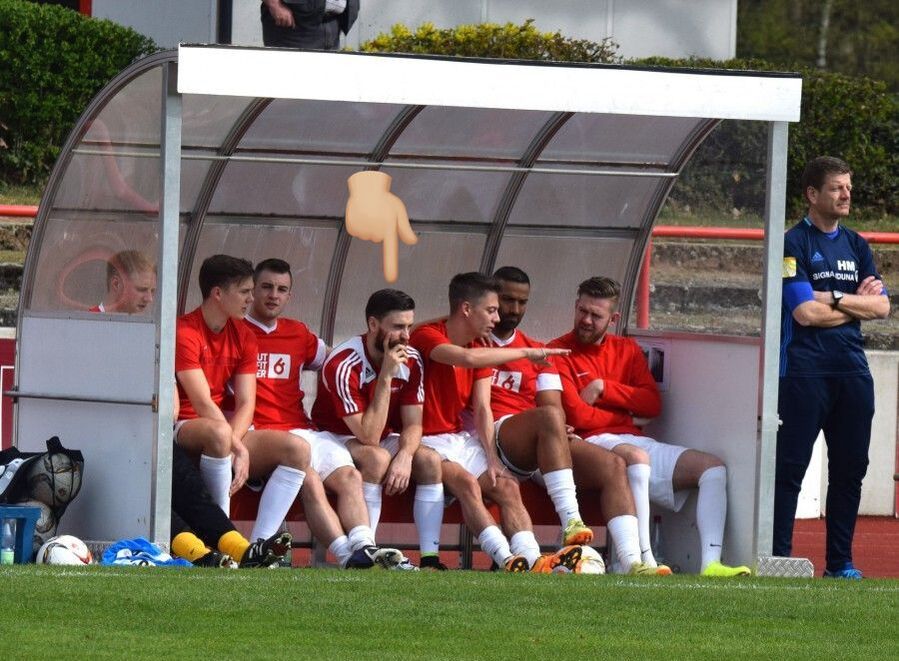
Playing in Germany was a huge part of my career. While I was there, I developed and grew as a footballer in many ways. I become more tactically aware, more technical, and my German got better too. I was chosen to be in the starting 11 throughout the season (playing fullback).

This photo was taken of the only game I didn't start on the pitch. It's not a glorious action shot, but if you look closely, you can see something glorious in itself.
Picture
Take a look at me sitting there, where my eyes are focused, how engaged my body language is, how focussed I am.
Even though I wasn't on the field, I was using the opportunity to study the game from the bench. I watched the players in my position. I watched their movements, their decisions, how they interacted with the collective group. I watched the opponents and picked out which of them were most dangerous on the ball, which were fastest, which formation they played as a team; Scanning, identifying, preparing. It's not something every player does, but being invested in my career, it's part of the discipline.
​
The key take-away: Every moment is a choice, you can choose to sit back and be passive or you can create opportunities for growth. If you really want to achieve something, this is important. Patience is important too, but don't forget to do what you can with what is within your control.

​When your chance comes, you'll be ready for it.

- Zak Drake

0 Comments

EXPANDING YOUR TACTICAL INTELLIGENCE

5/30/2019

0 Comments

 
Alright, so you've been a CANXL player for a while now and you've mastered your technique, now what?

Now you can move on to the portion of the game that involves where you are and what you’re doing on the pitch in relation to everyone else, anticipating what is going to happen, where the ball is going to go, what runs people are going to make, and finally deciding which decisions to make. You're ready to develop your Tactical Intelligence.

Let's walk through the main factors of Tactical Intelligence that learned throughout the long career of Zak Drake. You don’t need to depend on learning and gaining experience as you age, you can learn it all here, and just go out and implement it! How’s that for awesome? All it will take is for you to make sure you’re studying this stuff and applying it. If you actively experiment with it, you’ll be on your way to mastery.

Here are our top four factors of Tactical Intelligence 
  1. Positioning | Know your Role
  2. Team Strategy | Squad up
  3. Sight vs. Vision | Read the Game
  4. Decision Making | The Holy Grail​

Let's explore!

1.POSITIONING

Picture
Build from the very basics:

What is positioning in soccer? Soccer has many different places designated for a person on your team to be during the game. This depends on a players specific tasks or roles within the team. Knowing your role on the field will let you play your part within your teams tactics. When you play your part well, you'll make smarter decisions, utilize your energy reserves properly, and support the run of play in order for your team to complete it's objective (which would ultimately be scoring goals & winning the game!).  So what are the roles?

Depending on your role, you'd be put into one of these broad categories: Goalkeeper, Defender, Midfielder, or Forward. And once you've got that covered, you'll be placed into your more specific position, whether it be in the center, on the outside, more offensive or holding. It will all depend on your coaches formation (4-4-2,  4-2-3-1,  etc.)

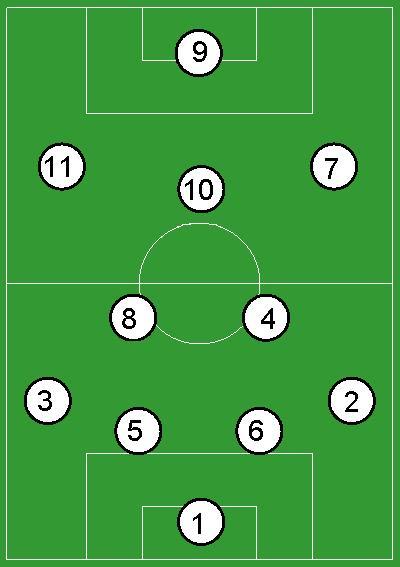
The traditional formation would have been a 4-4-2 and now most pro teams are sitting at a 4-2-3-1.

Which looks something like this!
Picture
If we break it down by the numbers that represent the positions here, you'll get a sense of the responsibilities each position has. We suggest checking out what your top 2-3 positions would be, and then read the roles of the immediate players around you. That way, you can get a feel for everyones roles and how they're likely to act on and off the ball.
Position 1 = Goalkeeper

Role & Responsibility:
Keeping the ball out of the net!
Being involved in the play as far as organizing the team.
Making sure players are marked up especially from the defensive side of things.
Being the commander/general.
Being a great shot stopper, being brave.
Commanding your box.
Dealing with crosses.
Having good distribution with hands and feet, playing it out of the back in different ways, accurately.
But most importantly *keeping the ball out of the net!*


Position 5 & 6 = Right + Left Center backs

​Role & Responsibility:
Usually winning headers in the air from goal kicks
Coming through winning the ball, winning tackles
Organizing the team make sure everyones compact, and marked up.
Blocking shots.
Making tackles
Doing most of the defensive work for the team (this is expected of you by the team)
Filling in another position from time to time (all players may have to do this and we will talk about it below!)


Position 2 & 3 = Right + Left Fullbacks

​Role & Responsibility:
#1 role is having a defensive mindset 
But in todays game, having a lot more freedom to get up the field and be more adventurous and getting in the attack (It's now more expected of you to do it)
Having a good engine
Getting up and down the line.
Coming in and joining the attack.
Filling space when wingers step inside and create space on the outside
Crossing into the box accurately & well
Defensively, stopping crosses coming into the box
Being quick on your feet
Being good on 1v1 defending situations
Having an appetite for the game because when you're tired and you make a run and don't get the ball, you have to get back and defend!

(Are you a fullback? Check out this post for some great Fullback Tactics!)

​
​Position 4 & 8 = Right + Left  Defensive Midfielders


​Role & Responsibility:
Having a bit more focus on defensive aspects and responsibility in this formation (as opposed to the traditional 4-4-2, which was getting up and down the field in a box-to-box way... a lot of running.)
Getting up into the attack sometimes to join, but the primary job is to protect the backline.
Cleaning up any passes in front of that defensive line.
Doubling up with defenders if balls are played into strikers.
Winning the ball back.
Blocking passes.
Covering playmakers.
Winning tackles in the midfield.
Playing a very important role on the offensive side.
Moving the ball.
Keeping the rhythm of play going.
Keeping good distribution.
Picking up ball from fullbacks.
Switching the play. 
Playmaking.
Keeping the ball moving.
Always showing.
Giving options.
Moving the ball. 
Coming back and receiving the ball for switching it to the other side of the field.
Playing lots of 2-touch football.
Keeping things ticking.
Position 10 = Attacking Central Midfielder

​Role & Responsibility:
Usually Playing with a lot of freedom to go where ever you want.
Scoring goals and creating chances.
Getting on the ball as often as possible (it's expected of you).
Finding little pockets of space between defenders (everyone wants to find you).
Trying to get the ball to feet.
Getting shots on goal. 
Following up chances.
Playing through balls to wingers making runs or to the strikers feet and joining the attack.
Getting into the box, whenever theres an opportunity to score.
(if you're waiting around outside, sitting in the midfield, you wont be very valuable to your team)
Acting in attacking roles as almost a second striker while getting involved into the play.
(you just have a bit more defensive responsibility).
Getting back and help out
(especially against a very good team, its almost a 4-5-1 on the defensive side of things)
Getting back to defend.
Playing combos and getting forward and attack on the offensive side.


Position 7 & 11 =  Right + Left Wingers

​Role & Responsibility:
​
Getting lots of width.
Get the ball out wide.
Whipping crosses into the box .
Cutting inside.
Creating goal scoring opportunities for yourself.
Playing combinations.
feeling a lot of freedom (all of the attacking players) .
Having freedom to change positions
(example: with total football, all players can cover all positions. If a fullback steps up, a winger can come back and cover for him until he can get back and fill his spot)
Interchange positions.
Switching with the other winger. 
Not feeling restricted to stay outside.
Coming inside sometimes.
Stepping up, while the striker drops.
Making sure you get back into your spot and help out defensively.
Taking players on in the right positions.
Having the job of feeding the striker.
Getting goal for yourself.
Helping out defensively
Helping double up with your fullback
Winning balls with your fullback and countering quickly


Position 9 = Striker
​
​Role & Responsibility:
Scoring goals. 
Putting the ball in the net.
Being clinical in front of the net.
Scoring at least 1 out of 2 chances.
Being sharp with your finishing.
Anytime a ball is whipped into the box, being that player getting on it .
Wanting to be making the run to the front post.
Peeling off making a run to the back post.
Showing at the top for a cut back.
Always being an option.
Always making good runs into space.
Playing as a target so show for the ball.
Get the ball to feet and holding the ball up really well.
Playing the ball off to your teammates.
Making give and go's.
Being able to keep possession (if you're the only guy up there, when the ball is played up to you you have to 
if you lose it, then your team can't get out of trouble).
Being a good target .
Being strong.
Shielding off defenders and playing the ball off.
Spinning and making runs between center backs or full backs and trying to get on that ball.
Most of all scoring goals and creating goals for your teammates!
Yes, you need to be greedy, but be smart, if you have two guys on you, maybe the best option is to pass and give them the goal scoring opportunity.​ ​

​Okay so you might have a preference of where you like to play, and you might not be given the opportunity in that position. If your coach isn't giving you that chance, you need to understand that playing different positions is one of the best things for your growth. If you want to be a striker, there might only be 1 in the formation (like the one above!). You may get put in a fullback or center back, it's not the end of the world, it's a positive thing if you really think about it! It's an opportunity to grow in a different way, its an opportunity for you to get your chance, because these positions are all really important. So maybe you can't make it as the best striker on your team, you can still strive to be the best fullback of the league. It's great for your development. #ownit

If you're stuck asking yourself which position should you play, the best way to answer is by first looking at your skills, and then asking which position you *want* to play. Then, look at what skills are required of that position and start developing those skills. Communicate with your coach and let them know you're working on _____ (insert important skill) and if there's ever an opportunity, you'd love it.
​
Ways to improve:
  • Learn from the Pros! Watching professional soccer is a great way to see where to be, when to move, and how to execute the type of runs that you would be making in a game. (Hint: don’t watch the ball during the game, watch the player who is in your position on the pitch)
  • Talk with your coach! Asking your coach doubles as a way to both improve your performance and it shows your coachability, which goes a long way. (Hint: Most players don’t approach the coach for a 1-v-1 chat, lead the way, and your teammates might follow the example you set. When everyone is on the same page, that’s when you start to win championships)
  • Get out there and train!​ #crushit

2. Team Strategy

Picture
The tactics of a team will determine the strength of a team. It's the bedrock of the playing style and philosophy of play that your team will put into action on the pitch. You definitely need to understand your role on the field (Read or re-read Factor #1 on Positioning if you have to!) and in addition to that, you've got to figure out where your teammates are, what their roles are, and then how you can best serve your team while keeping in mind the positioning of yourself & teammates. You might want to go back to that blog and read ALL of the positions, so you get a feel for what each player is doing on your team.

Work as a Unit & Trust One Another

Whether you're a part of the defensive or offensive unit (More details on these to come!), you're going to have to work together and work for each other and work off one another. Metaphorically, in a functional relationship, you have to be able to depend on your partner when you need them, and you can lean on him/her when times are hard for you and you're struggling. On the pitch you've got to have faith in your teammate. You need to be able to trust your unit to be there for you, whether that's giving you an outlet pass when you have the ball, or telling you about an opponent behind you.

More importantly, YOU need to be that support for your teammates. You need to help lift them up while pushing them to peak performance. This involves being aware of your teammates strengths and weaknesses, and assisting them in these areas when needed. 

You think Navy SEALs or Marines don't know their squads positioning & attributes? They have that stuff memorized, so that when they're in combat, they almost look like they're one body, moving fluidly, to efficiently & effectively achieve their mission. #SempriFi

If you don't know your team's tactics, it's a good time to sit down with your unit & coach to clarify your objectives, so that everyone is on the same page. You don't want to wait until you're out on the pitch wondering why your teammate isn't doing the same thing as you or watching your team bombing up long balls when you thought you were supposed to be keeping it on the deck. 

Once you have individual strength & awareness, then you can build that up with your unit, and then combine with your entire team to have a totally synched up squad who not only KNOWS what it's teammates are doing, but also TRUST one another to do it. Those are the fundamentals of team strategy & understanding.

​3. Sight vs. Vision

Picture
There's a difference between seeing something, and looking at something. When you see things, there is an air of passivity in the action, however when you're looking at something, it's more deliberate, your eyes get into focus, and your brain is activated on the conscious level. This is the difference I'm talking about when I differentiate between Sight and Vision. Sight involves a reaction to the surroundings, while Vision involves awareness, perception, and knowledge. Vision involves anticipation.

In football, it's really important to constantly be looking around the field, scanning for information that you can use to your advantage in the current or next play. This ability to read the game is called anticipation. Anticipation is a mix of prediction and expectation. Developing this handy tool will help you in all areas of your game. You'll be able to make smarter choices while attacking or defending, you'll be a step ahead of opponents (or with a hyper-developed level of anticipation, you'll be 5-steps ahead of your opponents *cough* Messi *cough). Whoever you are, and whichever position you're in, you've got to start building your anticipation muscle and understand that the game of football is a thinking game, and though it's great to get wrapped up in the joy of the game, or play in the moment, to be truly great, you've got to start playing ahead of the game.

A simple example of this (out of soccer context) is the world of chess. You'd never see a chess master just move pieces around a board for fun, without thinking or strategizing. Every move is deliberate, thought out, meticulous. 

Trusting your skill and instinct is huge, yet you don't want to solely rely on that. You've got to be involved mentally, stay sharp, and make the right moves on the pitch.

You can do this by figuring out where you want the ball to go (where you want to pass it) before you've even received it. This means getting your head up, on a swivel, and periscoping your available outlets prior to getting the ball.

Another way to flex this muscle, in a defensive situation, is to read your opponent with the ball. Practice looking at their body language and playing style. If you're the first defender approaching a player, and you learn the person is right foot dominant, you can close him down more effectively, or force him to his weaker foot. 

If you're not directly closing the player down (let's say you're a defender) you can read if his hips are opening up to strike the ball over the top, so you could gain an extra second in tracking back, or getting a tackle in, or getting your foot in the way, etc. There's a lot you can do with that split second.

​Vision takes you to the next level of football. It's what all the pros are doing at nearly every moment of the game. Watch for this as you study your favorite players, and once you pick it up, and start practicing, you'll start to feel like the game slows down for you, and you'll be ready to take on more challenges.

4. Decision Making

Picture
Do you really want to put yourself in the spotlight as a player? Do you want to show that you're a great player?

Then, listen up. A SUPER secret to taking your game to the next level is advancing your proficiency in your ability to make optimal decisions.

Woah, what's that really mean?

Simply put --->  Get really good at making the best choice. 

It's easier said than done, but I'll break down some ideas you can obtain this soccer holy grail.

For growth in this area, here are some of the best tips:

Study professional football

    I've said it before and I'll say it again, learn from the pro's! Study the players who are top class. Learn how they tick. When you're watching a game, ask yourself (and try to answer) why do the players make certain passes and other actions on the ball? Why did they make that decision? In answering this, you'll be putting yourself into the role of the player, and in a sort of empathetic way, you're developing your brain to understand the critical thinking it takes to make the best choices.

Mistake your way to success 

    
Trial and error is a great way to learn, since you're training more than you play in games, that would be a awesome time to work on your decision making. If you make a poor decision, like playing a high risk pass, try to figure out which alternatives could have been better. Did you have support behind you to retain possession? Did you forget to scan the other side of the field where a player was open/making a run? Learn from your mistakes, and and you'll quickly become more successful in choosing the best option.

Add restrictions ---> +/-

    
If you reduce the number of touches you're allowed to have on the ball, it forces you to make decisions quicker (if you don't, you're screwed! hehe). Start thinking about what to do before you have the ball. Being able to anticipate the play (see Sight vs. Vision again!) will help you destroy your opponents. As a bonus, playing quicker will improve your touch too! As a visual cue, you can write +/- on your wrist during training, and if you see it, you'll know to "add less" touches. 

These tips aren't going to just help you automatically become better at making decisions. It's not an overnight thing. In the long run, over time, your training to make optimal decisions will add up and improve your tactical awareness and ability as an individual.

What can you commit to today? Will you watch more football & study it? Will you check in with yourself after making mistakes? Can you force yourself to become quicker in your decision making?

If you want to take your game from an amateur level, to top class, decision making is a key factor. Work on it, and I assure you that you'll get better!
0 Comments

    Education

    CANXL Strives to provide the best free resources for footballers. Check out our growing library of content

    Archives

    June 2025
    February 2025
    June 2024
    July 2021
    May 2019

    Categories

    All

    RSS Feed

Powered by Create your own unique website with customizable templates.
  • TRAINING
    • SESSION CREATION
    • The CANXL Experience >
      • CONSULTING
  • CANXL Fundraiser
  • About
    • Contact
  • Soccer Blog
    • Blog All
  • CANXL Rewards
    • Scholarships
    • Refer a Friend
  • Trainer Certification Course
  • 2025 SUMMER TRAINING CAMPS